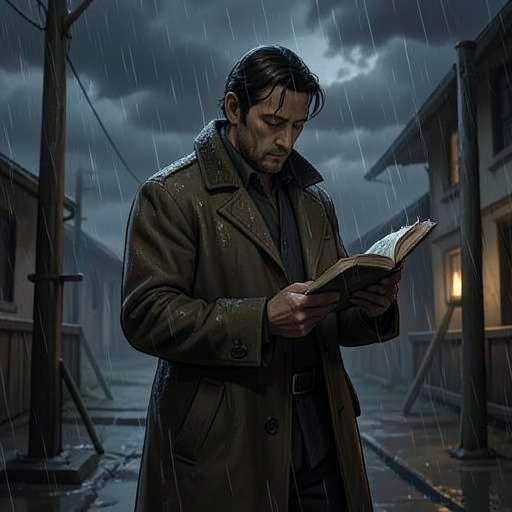
Rostov Shoots the Hussar Lieutenant
A Gentleman in MoscowRostov Shoots the Hussar Lieutenant is a remembered episode in which Count Alexander Ilyich Rostov turns from watching his sister’s courtship to confronting the man who has humiliated a household servant. The encounter leads to a pistol shot on the family drive, but its consequences prove less immediate and more complicated than the Count’s first account suggests.
The Courtship and the Birthday
Before the shooting, the lieutenant had appeared to behave with conspicuous restraint toward Helena Rostov. Over several weeks, the Count watched their courtship at lunches, teas, and walks through the gardens. The lieutenant pulled out Helena’s chair, picked blossoms, and read and wrote verses. The Count, already alert to the possibility that the man’s conduct would betray him as it had at the Novobaczkys’, waited for that seeming polish to fail.
The decisive occasion was Helena’s twentieth birthday. The lieutenant was away on maneuvers when the Count and Helena visited a neighbor; at dusk they returned to find his troika outside their house. Helena took its arrival as a sign that he had rushed back from his battalion to wish her well. Instead, inside the entry hall, they found Nadezhda, Helena’s handmaiden, visibly humiliated, her clothing disordered and her arms crossed over her chest. Helena stumbled into a chair and covered her face. The lieutenant grinned at the Count, then left without acknowledging Helena. The birthday visit thus overturned the courtship’s carefully maintained appearance and gave the Count an immediate reason to intervene.
The Decision and the Shot
At the entry hall, the Count’s earlier watchfulness gave way to action. He crossed to a pair of pistols hanging beneath the family crest. Helena caught at his sleeve and asked where he was going, but he left without looking back at her. In the recollection told to Charles, that gesture remains a source of self-reproach: he recognizes that, in responding to the lieutenant’s cruelty, he also abandoned his sister at the moment she needed him.
The lieutenant had only a brief head start. Rather than galloping away, he moved his troika at little more than a trot. The Count describes this contrast as characteristic: the man had hurried toward parties but seemed unhurried in leaving the scene of his own misconduct. The route made an interception possible. A pair of opposing arcs, lined with apple trees, joined the house to the main road; the Count’s horse was still tied by the house. He mounted and galloped in the opposite direction, reaching the point where the arcs met the road before the lieutenant arrived. There he dismounted and waited.
The scene he recalls is strikingly open and calm: the Count alone on the drive, with blue sky, a breeze, and apple trees in bloom. The lieutenant, who had been moving slowly, rose in his troika, lifted his whip, and drove the horses at full speed toward him. The Count understood the approach as an attempt to run him down. He raised his arm, steadied his aim, and fired. The shot knocked the lieutenant from his feet; the reins came free, the horses veered off the drive, and the troika overturned. The lieutenant lay still in the dust. The recollection presents the shot as a sudden answer to an imminent charge, but not as a clean resolution: the Count’s intervention has begun a chain of consequences that he will later recount with an enduring sense of responsibility.
The Wound and Its Aftermath
The apparent fatality was a misreading of the scene. When Charles later asked about the interval before the lieutenant’s death, the Count dated the shooting to February 1915 and explained that he had meant to hit the man in the heart. He had been known since youth for his marksmanship, but the uneven road, the lieutenant’s moving reins, and apple blossoms blowing across his line of sight threw off his aim. The bullet struck the lieutenant in the right shoulder instead. The Count’s remembered certainty that he had killed him gives way to a more difficult account: the shot wounded him, but did not end his life.
After the troika overturned, the Count bound the lieutenant’s wound, righted the vehicle, and drove him home. The injured man cursed him throughout the journey, a response the Count considered deserved. Although he survived, his right arm remained lame, forcing him to surrender his Hussar commission. When the lieutenant’s father filed an official complaint, the Count’s grandmother sent him to Paris, following the custom of the time. The confrontation therefore carried consequences beyond the immediate injury: it altered both men’s paths and separated the Count from home.
Later that summer, despite his injury, the lieutenant insisted on returning to the head of his regiment. At the Second Battle of the Masurian Lakes, an Austrian dragoon knocked him from his horse and killed him with a bayonet. His death came in battle, not from the Count’s bullet, but the earlier shot had left him lame and had already cost him his commission. The distinction does not erase the Count’s sense of responsibility. When Charles expresses sympathy for the death while suggesting that the Count has assumed more than his share of guilt, the episode closes on the gap between causal responsibility and self-accusation: the Count did not kill the lieutenant with that shot, yet he continues to carry the encounter as part of the chain that led to his death.
The Limits of the Count’s Account
The episode’s moral tension lies not only in the bullet’s consequences but in the Count’s choice of what to notice and what to leave behind. He condemns the lieutenant for leaving Helena without a glance, yet acknowledges that he himself did the same when she caught his sleeve. The parallel does not make their actions equivalent: the lieutenant had humiliated Nadezhda, while the Count was setting out to confront him. But the repeated gesture unsettles a simple account of the Count as a defender acting without cost to those he meant to protect. His own later shake of the head, condemning his behavior, preserves that unease rather than excusing it.